Saturday, November 7, 2009

The Black Circle (The 39 Clues) by Patrick Carman

The 39 Clues series reaches its midway point with Patrick Carman's The Black Circle. Dan and Amy Cahill's fast-paced adventure shows no sign of slowing. Their continued quest for the 39 Clues - acquiring all 39 will enable Dan and Amy to become the most powerful members of the Cahill family, the most powerful family in the world - is taking them around the world and back again.

Here, as best as I can, is a review in pictures:

The fifth book documenting Amy and Dan Cahill's hunt for the 39 Clues takes them all around

After leaving their 5-star hotel near the

Amy and Dan receive a message and airline tickets at the airport. The flight takes them to Volgograd. The message takes them to


There they meet the usual Cahill suspects and form and unlikely partnership with the Holts. Dan and Amy head to St. Petersburg to visit


and meet this guy.

The next message is about Russian author Dostoevsky and sends the Holts to Omsk to see

where they get the next message. Relaying what they discover back the Amy and Dan, the Cahills head outside St. Petersburg to

inside


Another message, relayed back to Hamilton Holt, sends his family 52 miles outside of Magadan, Siberia on the

Next, the Holts' discovery directs Amy and Dan to


in Moscow. There they visit


Another flight takes them to Yekaterinburg where they visit

Hidden beneath the church is

Here they find the next of the 39 Clues, information about their parents, and a hint to their next destination.

Okay, so that probably doesn't help too much. The point I want to make is that background knowledge will play a big part in understanding the historical significance of The Black Circle. Middle and upper elementary readers will certainly enjoy the twists and turns, fights, and near escapes that 39 Clues readers have grown accustomed to.

But how many of the above locations do you recognize? One or two of them, maybe. But all of them? Young readers will enjoy the book even more knowing - and seeing - that all the places characters visit are real. The Black Circle would work great as a read aloud, with images displayed in front of the class. Encourage independent readers to sit close to their computers with Google Images ready to roll. Pictures of all the locations, as evidenced above, are readily available.

Friday, November 6, 2009

Cowgirl Kate and Cocoa by Erica Silverman

It's time to herd cows. That's what cowgirls and cowhorses do. But on the way to the pasture, Cocoa decides he’s thirsty. After getting a drink at the creek, Cowgirl Kate asks if he's ready to herd cows. Not when he’s hungry! Two apples later, he claims he's too full to herd cows.

“You are a pig,” said Cowgirl Kate.
“No,” said Cocoa, “I am a horse.”

To pass the time, Cowgirl Kate tells Cocoa a story, the story of cowgirl who went to a ranch looking for a cowhorse. She’s a cowgirl from the boots up. He’s a cowhorse from the mane down. He promises to work hard every day, saying, “A cowhorse always does his job.” That’s when Cowgirl Kate knew she had found her horse.

Readers are introduced to this cow herding duo in Chapter One. The following chapters show how they work together and watch out for one another. Not only does Cowgirl Kate always have an apple or a carrot or a surprise for Cocoa when he needs it, but Cocoa also keeps on eye on Cowgirl Kate. When she climbs too high in a tree for his liking, he’s quickly there urging her down and back into the saddle. When Cowgirl Kate can’t get to sleep on a shivery night in the barn, Cocoa sings her a lullaby and snuggles close.

Cowgirl Kate and Cocoa, a Geisel Honor book, is perfect for readers transitioning to chapter books. Erica Silverman’s chapters are short and engaging, Betsy Lewin’s pictures compliment the text perfectly with humor and simplicity, and subsequent titles in the series will keep readers reading.

Thursday, November 5, 2009

North / South Wisconsin Teachers' Convention 2009

Thank you to everyone who attended my sectionals at the Kalahari on Tuesday. (And sorry for the lateness of this post.) It was a pleasure to see so many friends from around the state and from my former staffs at Immanuel and Hales Corners.

If anyone didn't get a handout or a book list for Help Readers Love Reading!, please email me. The address is in the banner at the top of the page and in the margin to the right. I'll get one sent off A.S.A.P.

There was no handout for Books for Religion Lessons, but below you'll see the basic outline and the books I mentioned. I hope it's helpful.

Thanks again to everyone who attended and for all the positive comments. I'd love to hear from more of you - what you liked, didn't like, or any other thoughts. Leave a comment at the bottom of this post or send me an email.

The Obvious
The Bronze Bow by Elizabeth George Speare
The Ballad of Matthew's Begats by Andrew Peterson
This Is Just to Say by Joyce Sidman
The Chronicles of Narnia by C. S. Lewis
On the Edge of the Dark Sea of Darkness (The Wingfeather Saga) by Andrew Peterson
Wombat Divine by Mem Fox
Great Joy by Kate DiCamillo

Discussion Starters
The Pencil by Allan Ahlberg
Tuck Everlasting by Natalie Babbitt
Wolves by Emily Gravett
The Giver by Lois Lowry

Look At Characters - The Big Picture
Number the Stars by Lois Lowry
Katie Kazoo Switcheroo (Series) by
Rosie and Michael by Judith Viorst

Look At Characters - The Little Details
Walk Two Moons by Sharon Creech
Harriet, You'll Drive Me Wild by Mem Fox
Savvy by Ingrid Law
Hope Was Here by Joan Bauer

Introduce a Topic
Diary of a Wimpy Kid: Dog Days by Jeff Kinney
Knuffle Bunny by Mo Willems
The Sea of Trolls (Trolls Trilogy) by Nancy Farmer
A Season of Gifts (A Long Way from Chicago, A Year Down Yonder) by Richard Peck
Red Ranger Came Calling by Berkeley Breathed
The OK Book by Amy Krouse Rosenthal
The Library by Sarah Stewart

Does It Have To Be Books?
Sports Illustrated from July 27, 2009
Sports Illustrated from June 29, 2009

And this movie:


Friday, October 30, 2009

Pigs Make Me Sneeze by Mo Willems

Gerald has been known to panic. Okay, maybe panic is a bit strong, but he does jump to conclusions now and again. In Mo Willems’ tenth Elephant and Piggie book, Pigs Make Me Sneeze, Gerald holds true to form.

When Piggie arrives and asks innocently, “Gerald! What do you want to do today?” he receives a confusing response.

Gerald: “I want– aaa”
Piggie: “Yes?”
Gerald: “aaaa”
Piggie: “A what?”
Gerald: “aaaaa!!”
Piggie: “A ball? A swim? A hat?”
Gerald: “CHOOOO!!!”

Can you see the conclusion Gerald is about to draw? Piggie arrived. Gerald sneezed (and sneezed again … and again). Therefore Piggie must be the cause of the sneezes. And if pigs do make Gerald sneeze, then it can only mean one thing.

The end of a friendship.

As Gerald leaves his best friend’s presence – forever – he passes Doctor Cat who inquires about Gerald’s melancholy. Gerald explains everything, from Piggie, to his sneezes, to the end of a friendship due to self-diagnosed porcine allergies. As Gerald continues sneezing around Doctor Cat, the physician analyzes the situation and draws a completely different conclusion.

Gerald is thrilled with his diagnosis and rushes back to tell Piggie. The final scene is reminiscent of the conclusion of There is a Bird On Your Head, but is no less satisfying for readers. Pigs Make Me Sneeze is another soon-to-be classic and welcome addition to the Elephant and Piggie series from Mo Willems.

Monday, October 26, 2009

Big Frog Can't Fit In by Mo Willems

There aren’t too many books I’ll purchase sight unseen. I like to get my hands on them, flip through them, read some random pages, you know – give books a good once over, just to be sure. But if a book has Mo Willems’ name on the cover, all bets are off. He’s earned it. Or maybe the pigeon has. Possibly Elephant and Piggie.

And that’s how Big Frog Can’t Fit In arrived on my doorstep yesterday. There was no disappointment.

As a story, there’s not too much here. Big Frog is big. Too big for her book. She’s not short enough or bendable enough and, frankly, “Big Frog can’t stand it!” But Big Frog has friends, and friends are good at helping solve problems. When a big number of little friends come to Big Frog’s aid, a solution is quickly discovered.

The magic of the book is the pop-ups, or more accurately, pop-outs as the book proclaims. The book even gives a large print shout out to Bruce Foster for his paper engineering, referring to him in one spot as Big Bad Bruce Foster. Big Frog sticks her tongue out to proclaim her feelings about not fitting in. She dreams of shrinking or bending around into a pretzel-ish knot and folds her arms in disgust. Big Frog’s friends even appear out of nowhere to help.

Attentive readers will appreciate all the little non-Frog related jokes. There’s a caution on the package insert: “WARNING: PACKAGE CONTAINS ONE HIDDEN PIGEON.” (Sure enough, there’s that pigeon stealing a smidgen of Big Frog’s glory.) A small orange box is part of the packaging to make sure Big Frog’s foot doesn’t get crushed. The back of the box reads, “Hyperion books for Children has done all it can to ensure that BIG FROG CAN’T FIT IN is more fun that this small orange box. But, kids … what can YOU do?”

My only concern is that it’s a pop-up – eh-hem, pop-out book. As a kid I had a Star Wars pop-up book. I was extremely frustrated when Luke couldn’t rescue Princess Leia anymore and when Obi-Wan Kenobi battled Darth Vader but he wouldn’t die because the flip wouldn’t flop. (Maybe I was a bit rough on my pop-up books, but hey, I was a kid!) The pop-outs in Big Frog Can’t Fit In are extremely intricate. That’s what makes the book so cool. Hopefully Big Frog’s friends are always able to come to his rescue, that the pop-outs don’t prevent their friendly assistance.

Despite my childhood history with pop-up books, Big Frog Can’t Fit In is getting my highest recommendation. Hopefully Big Frog can fit on bookshelves. A lot of them.

Saturday, October 24, 2009

These Are a Few of My Favorite Things

Children's Books + NFL Football = Unequivocal Bliss

Check out Help Readers Too! to see what I'm talking about.

Thursday, October 22, 2009

Wilson and Miss Lovely by John Stadler

Wilson loves school. The main reason? Miss Lovely. After only one week of school, Wilson already knows it’s the place for him. All he can think about is, “Miss Lovely! Miss Lovely! Miss Lovely!” He’s too excited to sleep and too excited to stay in bed one minute more. He’s up early – washed, dressed, and fully fed – all by himself.

But he’s not the only one up early.

As Wilson prepares for his next day of school, readers look behind a foldout page to see the other early riser. (Or just a part, anyway.) One foot, green, possibly scaly, certainly large, with three sharp claws, taking one step closer to Wilson.

Wilson leaves for the bus, only to find the world quietly deserted. There’s no one at the bus stop, and no bus arrives. Why is he alone?

Only we readers know better. He is not alone. Another fold out reveals one long tail, definitely scaly, green, with spikes all the way to its tippy-tip.

Wilson runs to school to find all the busses neatly lined up as if they’ve already dropped off their students, but no students. The hallways are deserted. The classrooms and desks are all empty. No one but Wilson is present. Something is wrong, he thinks.

“And somewhere, not so very far away at all, something was approaching. Nearer, nearer, nearer it came!” we read in the next foldout. This time it’s a hand, again it’s green, with webbed fingers and sharp, pointy claws wiggling menacingly.

Wilson continues throughout his day alone. He does the lessons. He goes to recess. He even sends himself to the principal’s office when his behavior becomes unruly.

And all the while, the mysterious stalker closes in.

Kids will have number of reactions to John Stadler’s back-to-school mystery. Some will wonder why there’s nobody at school. Some will guess the real reason. Some, however – the kids like me – will guess it’s because the monster stalking Wilson has already devoured the other unsuspecting bunnies and is about to finish the job by finishing Wilson.

But all readers, even the most morbid among us, will be surprised by the ending, just as Wilson is surprised to finally see Miss Lovely.

Saturday, October 17, 2009

Thanks to Everyone in Arkansas

A great big thank you to everyone who attended my sectionals at the Arkansas Reading Recovery & Comprehensive Literacy K-8 Conference. Everyone in Little Rock was extremely welcoming and supportive. And a special thanks to Carla and Stephanie who, a year and a half ago, thought it would be a good idea to ask "Brian in the Back" to present at their fall conference. Thanks!

A number of people requested additional handouts, especially for the book lists. You have a couple of options. First, you can simply email me - the address is in the banner and to the right. Be sure to specify the correct sectional and whether you wanted the handout or book list. (Another popular option has been, "Just send me one of everything, please." That works.)

Help Readers Love Reading! (Grades K-3)
Help Readers Love Reading! (Grades 3-8)
Books for Content Area Mini-Lessons (Grades K-3)
Books for Content Area Mini-Lessons (Grades 3-8)

Or, if you are missing just a recommended book list, you can scroll through the site by grade level.

Grades K-2
Grades 2-4
Grades 3-5
Grades 4-6
Grades 5-7
Grades 6-8
Young Adult

I'm not exactly sure if all the titles on the book lists appear on the site, but if I feel a book is recommend-able, chances are I've added it here or will soon.

And finally, I'd love to hear from more of you. If there was something you especially liked or disliked, questions you have, or anything else, let me know. Feel free to leave a comment at the bottom of this post or send me an email. Thanks again!

Friday, October 16, 2009

Higher! Higher! by Leslie Patricelli

If a book immediately connects to the kid reading it, or to the adult reading it to the kid, or the kid to whom the adult is reading, or to the sibling on the other side of the room while the book is being read to a younger sibling, or the grandparent who … well, you get the picture. If the book makes a connection, chances are it’s going to be a winner.

For us it happened when Little Pea hollered, “Again! Again!"

It happened when the boy realized, “Papa’s got a Stormy Kromer!” when reading Stormy’s Hat.

It happened with Make Way for Ducklings when we actually met the ducklings.

And it happened again with Leslie Patricelli's Higher! Higher!. What child doesn’t scream, “Higher! Higher!” when being pushed on the swings? Ours sure did.

I remember shouting the exact same thing when I was but a wee-one, but my imagination is apparently much Lower! Lower! than the young lady’s in the book. I always thought a loop-the-loop around the swing set bar would be cool. But to swing as high as a giraffe? To the tops of buildings? To mountain peaks? Past airplanes and the atmosphere? That’s some serious swinging!

Swinging of this magnitude is, according to the text, not exclusive to Earth. If there is life on other planets, then it stands to reason that extra-terrestrial toddlers would also love swinging higher and higher. And if two simultaneous swingers were to meet at their highest point, what would they do?

“High five!”

After swinging like that, or after reading a book like Higher! Higher!, there’s only one thing a kid can say. “Again!”


Friday, October 9, 2009

In Which I Get an Education

New column in the local paper today in which I admit my ignorance and share the steps taken towards gaining the proper educaton.

But really, how can fathers know all there is to know about daughters?

Read about it here or print it out here. Thanks for visiting.

Saturday, October 3, 2009

Strong Man by Meghan McCarthy

Maybe it was from my own comics, or maybe from the few comics my dad had kept and I reread, but I really do remember the Charles Atlas ads imploring, “Let me PROVE I can make YOU A NEW MAN.” The ads showed, in only eight comic panels, insult, humiliation, anger, determination, vengeance, and victory, and how a 97 pound “runt” can become “The World’s Most Perfectly Developed Man.”

No, Mr. Atlas didn’t get my $0.10.

Strong Man: The Story of Charles Atlas begins with the arrival of Angelo Siciliano at Ellis Island. It describes his tough Brooklyn neighborhood and a beating he took from a local bully. Then readers are presented with the scene made famous in the comics. Sand is kicked in Angelo’s face at the beach, humiliating him in front of his date. I always thought the event was fiction, created simply to separate young 97-pound runts around the country from their dimes, but apparently it’s real. Nevertheless, it’s the event that changed Angelo Siciliano into Charles Atlas.

Strong Man goes on to describe his incredible feats of strength like tearing phone books in half, bending iron bars, lifting young ladies above his head, and pulling a 145,000 pound train with his bare hands. [Feel free to reread that last line in your best, deep baritone. Adding your own dun-dun-duuuuuh! adds a little panache.]

Charles Atlas’s fitness course encouraged more than physical strength. Charles encouraged youngsters to eat right and clean their rooms and not to laze about in bed. (Hmmm … I wonder where Hulk Hogan, 1980’s WWF icon, got his famous, “Train, say your prayers, eat your vitamins, be true to yourself, true to your country, and be a real American!”?) Charles had a passion for fitness, that’s obvious, but also encouraged others, both kids and adults alike, to “take charge of your life."

Strong Man ends with suggested exercises for kids and a note for parents about the importance of activity in children’s lives. The author’s note gives more detail about Atlas’s life, including how he modeled what he preached, but also asks the question, “Who really was Charles Atlas?” What’s myth? What’s reality? How much of the Charles Atlas legend is based on fact and how much has it been exaggerated or embellished?

No reading of Meghan McCarthy’s book would be complete without looking at the original ads. The whole thing – comic books, “97 pound runt,” 32 page illustrated book, change-your-life-all-for-just-ten-cents – appears at first glance to be a plot for one man to get rich quick, one dime at a time. But Strong Man lets readers learn the story behind the bulges.

Wednesday, September 23, 2009

When You Reach Me by Rebecca Stead

Miranda's mom is going to be on The $20,000 Pyramid on April 27, 1979. Miranda knew, of course, that something important would happen on April 27, 1979 at Studio TV-15. After all, the other proofs written in the cryptic note she received were true. "Christmas Day: Tesser Well." Mysterious, but true. And "3 p.m. today: Colin's knapsack" the day she received the note. Also mysterious, and also very true.

More accurately, someone else knew these things would happen. Miranda only knew because she received the note.

Miranda received several notes. The first note said "I am coming to save your friend's life, and my own” and requested a return letter from Miranda, even though the note is unsigned. The second note asked Miranda not to tell anyone about the notes and reminded her to write the letter. The third note offered the proofs.

The notes add to the complications in Miranda’s life. Her best friend since forever, Sal, who lives in the apartment downstairs, has suddenly stopped being friendly. She begins a new friendship with Annemarie and Colin. A homeless man, called the laughing man, moves into her neighborhood. Middle school troubles – from first jobs to friendships to getting a class project proposal approved by Jimmy Stringer, head of the class Main Street Planning Board – are all part of Miranda’s life and are all accurately portrayed.

A Wrinkle in Time by Madeline L’Engle is Miranda’s favorite book. It’s been a favorite of mine too, so I was intrigued by Miranda and Marcus’s discussion about when Meg and Calvin return home in the book. Marcus, a neighborhood boy, explains, “So if they had gotten home five minutes before they left, like those ladies promised they would, then they would have seen themselves get back. Before they left.”

Which leads me to this: A traumatic event occurs in a person’s life. This tragedy affects the person so immensely that it creates a personal desire to change the event. The person seeks to discover the secret of time travel and succeeds. He then he travels back in time to prevent the tragic event from ever happening.

So now, with the tragic event no longer occurring, doesn’t the impetus to seek out the secret of time travel disappear, causing the traumatic event to once again occur?

It’s a disruption in the time/space continuum worthy of Doc Brown.

Then again, kids are geniuses when it comes to suspension of disbelief. (And don't we still love Back to the Future?) Adults are just so … so … well, they’re just so grown up. When You Reach Me is a page turner, most certainly. I only came up with my grown-up thoughts the next morning while getting ready for school, certainly not while I was reading. I was too captivated.

Kids will be too.

Then again, wouldn’t it be easier to just take one simple step to the left? It works for this girl.


I wonder if Rebecca Stead is a fan of Relient K.

Saturday, September 19, 2009

The Curious Garden by Peter Brown

Readers will be curious about The Curious Garden starting immediately with the cover. What kind of tree is that, and how’s that kid sitting on there? What’s he reading? Why do those plants look like birds and a butterfly?

The title page, with GARDEN spelled out in bricks, wildflowers growing in every crevice, “The Curious” trimmed in bushes growing out of the bricks, and a young boy holding garden shears seemingly responsible for the whole thing, will add to readers’ curiosity. (See below)

I’m looking forward to this magical garden, readers might think, where trees grow out of bricks and plants are shaped like animals and bushy leaves support little boys.

But turning the page shows a dreary city, muted reds and all shades of gray and smokestacks billowing black clouds into the air. “There once was a city without gardens or trees or greenery of any kind,” it reads.

There is one boy, however, who loves to be outside. He discovers a small patch of dying wildflowers on the abandoned elevated train tracks. Liam knew nothing about gardening, but he tried the best he could. Soon Liam nurtured the wildflowers into a real, growing garden. And as plants will, they begin to explore. Weeds and mosses begin to travel down the abandoned elevated tracks. By winter, Liam has cultivated quite a garden, an elevated strip of green winding its way through the dreary city.

When spring comes, the garden decides to continue its exploration of the city. Cracks and crevices, nooks and crannies, all become potential homes for the curious garden. With a little help from Liam.

After many years, the city is transformed – and not just the city itself, but the city’s residents. The buildings and streets and abandoned elevated train tracks are all still there, but only with careful observation would visitors to the city recognize this once dreary metropolis.

The resident seven-year-old and I spent quite a while comparing the city illustration at the beginning to the transformed city illustration at the end. Every inch of the two page illustration shows some kid of change, and all of the events during the story can be located in this final view of the entire city.

The Curious Garden, despite my initial suspicions of a magical garden, is just an ordinary bunch of plants. The magic happens when one little boy encourages them – and a city and its residents allow them – to do what they do best. Grow.

In the author's note, Peter Brown tells about the Highline in Manhattan, a real abandoned railway that inspired his book. Click here to see what's happenening with the Highline today.

Title page image from http://www.peterbrownstudios.com/.

Sunday, September 13, 2009

North! Or Be Eaten by Andrew Peterson

The Wingfeather Saga continues in North! Or Be Eaten, sequel to Andrew Peterson’s first novel, On the Edge of the Dark Sea of Darkness. Janner, Tink, and Leeli Igiby have learned the truth about the Jewels of Anniera and the Wingfeather family. So, unfortunately, have the evil Fangs of Dang, henchmen of ruthless ruler Gnag the Nameless. Glipwood Township, the only home the Igibys have ever known, is but a remnant of what it once was, mostly destroyed by a storm the night they escaped to Anklejelly Manor and is deserted by nearly all its occupants.

The Igibys, along with Podo, Nia, Nugget, and Peet the Sock Man, are at Peet’s castle preparing to flee to the northern Ice Prairies and the increased safety brought by its freezing temperatures. The Fangs, unable to manage the cold, will be unable to pursue them. Nearly all their preparations must be deserted, however, when they receive warning from Oskar N. Reteep, a friend thought to be dead, of another betrayal by Zouzab the Ridgerunner.

The Fangs are coming for them. Now.

The Igiby journey is rife with adventure and close calls. The family narrowly escapes Fangs and trolls and a gargan rockroach and snickbuzzards and even a toothy cow of Skree. Or two. They face the dangers of Dugtown, the Stranders of the East End, and a fork factory so horrible it earns two exclamation points, as in Fork! Factory!

But after the events of Book One, adventure in Book Two is a given. Seeing the Igiby children grow as they face new responsibilities and dangers, not only as people, but as royalty, is where North! Or Be Eaten excels. Janner’s reluctant acceptance of being Throne Warden, coupled with shaky confidence in fulfilling his call, has him walking a fine line between honored Throne Warden of Anniera and the despair of Artham Wingfeather, previous Throne Warden. Tink simply longs for the lost peace of the Igiby cottage and refuses to seize his role as High King. Leeli transforms from little sister to one who brings confidence to her family and calm maturity to times of distress.

Podo, Nia, and Peet don’t show growth as characters as much as their true character is revealed. Podo’s pirate past, thus far only casually mentioned, becomes a major factor in whether the Wingfeather legacy will continue. Nia gently slips back into her previous role as royalty, and the mystery of Peet’s past comes to the forefront as he must either give in to despair or move ahead in a new role.

Darker than its predecessor, North! Or Be Eaten draws readers into the hopelessness of Skreeans without allowing readers to completely lose hope themselves. The magnitude of Gnag’s evilness is infinitely clearer, but through it all is a family who refuses to give up, believing their quest to reestablish a kingdom of good can ultimately prevail. The family is not perfect. Individuals make decisions that clearly won’t move them toward their goal, but a loved one is always there offering encouragement and forgiveness.

Together is the only way they can succeed.

Additional thoughts can be found at Help Readers Too!
The Character Angle
The Bigger Picture Angle
The Darkness Angle
The Ain't It Creative Angle

Friday, September 11, 2009

Gone Fishin' & New Column

August. What a great summer month full of great summer activities!

I spent mornings at Camp Graduate Work (although I don't have a single beaded coin purse to show for it) and afternoons visiting the various attractions in and around New Job Amusement Park (I rode the technology training ride, the TB test thrill ride, saw Bennie and the Insurers perform, and even spent time in their new hands-on section, "Paperwork Parade.")

It's been a hoot, I can assure you.

But imagine my surprise when I returned to the welcome arms of my online home and found my meticulously made Gone Fishin' sign lying on the ground. I feel like I ran off and left readers wondering where I was and when I was going to return. Accept my apologies! And rest assured, if I run into the local youngsters responsible for these shenanigans, I'm goin' Gary Paulsen on 'em and they'll all end up with library cards.

Reviews are coming. They are. (Famous last words ... at least I didn't use "I promise.") I have been reading books. I just haven't been writing about them.

In the meantime, here's a link to my latest newspaper column about one other summer trip. Here's the printable version.

Friday, August 14, 2009

It's That Final Ten Percent

Whoa. No updates since July 22. Yikes.

No, I haven't fallen off the map. I'm still here and still writing. Unfortunately, however, the site has fallen. Fallen on my priority list, that is. There's plenty going on around here, and plenty to come on the site.

Nevertheless, I'm trying to give everything my full 100%. And if I seem slack off or fade away after only about 90% or so, maybe it's just the lingering immaturity. Which is a perfect lead into the next paragraph...

Here's a link to my latest column. Or here's the printable version.

Wednesday, July 22, 2009

Stink and the Great Guinea Pig Express by Megan McDonald

Stink Moody’s fourth adventure begins as he and his friends, Sophie of the Elves and Webster, are building the Great Wall of China out of cereal boxes. They only have one little mishap – a battle with Stink’s super-sticky duck tape. All three of them get stuck together! “Don’t worry,” says Stink, “Friends should stick together.”

But then they notice that the great wall is moving. Quivering. Shaking.

And … squeaking?

The three investigators discover three escaped guinea pigs. They decide to talk to Mrs. Birdwhistle at their favorite pet store, Fur & Fangs. When they arrive they find cages toppled! Escaped animals are everywhere! Puppies squeal, parrots squawk, rabbits race, and guinea pigs squeak from every corner of the room.

“Don’t just stand there,” said Mrs. Birdwhistle, “Help me catch them.”

After the escapees are once again corralled, Mrs. B. explains that the guinea pigs were being used in lab experiments, so she took them in, all 101 of them. Unfortunately, now she needs to find families to adopt them or they’ll be put to sleep, and she has no idea how to make it happen.

Luckily for her, she’s friends with Stink, Webster, and Sophie. They go door to door in the neighborhood. One man says he’d take fifty, but when they recognize him as Sam the Snake Man, they wisely decide against it.

That’s when they get the idea for the Great Guinea Pig Express – Squeals on Wheels! – a converted camper that houses the critters and makes a great traveling advertisement. After finding a few adoptive pet owners in a local parking lot, the Fantastic Fur Friends take a trip to Virginia Beach where a friend of Mrs. B’s has started a guinea pig rescue and has agreed to take twenty of guinea pigs. On their trip they stop at various points of interest (ever see the world’s oldest ham or a giant gorilla named Hugh Mongous?) to find more adoptive homes.

Filled with plenty of goofiness, like Stink’s crawling underwear and a guinea pig that looks like Chewbacca, Stink and the Great Guinea Pig Express is another fantastic addition to Megan McDonald’s tales of the Moody Family. Stink and Judy are welcome additions to every middle grade classroom.

Sunday, July 19, 2009

The Land of the Silver Apples by Nancy Farmer

Jack’s sister, Lucy, is set to play an important role in the village’s need-fire ceremony, a rite intended to leave behind the evils of the old year and move into the new year with a fresh start. And the past year has had its share of evil, as readers will know from reading The Sea of Trolls, the first book in Nancy Farmer’s trilogy.

But when Jack’s father once again gives in to Lucy’s wailing, purposely permitting her to wear a forbidden necklace to the ceremony, Lucy allows old evil to creep into the new year. It spreads. It’s like a contagion, says the Bard, and it must be driven off before it affects everyone.

Giles Crookleg, Jack and Lucy’s father, then relates a story that he has kept hidden for years. After Lucy was born and her mother, Alditha, became sick, Giles took Lucy to the tanner’s wife for care. On the return trip he stopped to pick ripe hazelnuts, and while he was distracted, Lucy was kidnapped. But by some miracle, as he saw it, the child was replaced by another beautiful baby.

When seeking answers at St. Filian’s monastery, Jack’s unpolished bard skills cause an earthquake. In the ensuing chaos, Lucy (the one readers already know) is kidnapped by the Lady of the Lake, a close friend of the Queen of Elfland. The Lady also takes all the water from St. Filian’s well. Jack and Pega, a slave girl Jack recently freed, and another former slave named Brutus embark on a quest. Find Lucy. Find the replacement Lucy. Bring water back.

The second book of the trilogy introduces more mythical creatures. Jack and his fellow travelers encounter kelpies and a knucker hole and girl nearly buried in moss and even dragon poop. There are yarthkins and hobgoblins, including a king named Bugaboo and his Nemesis. And of course they travel to Elfland, meet elves, and learn the secrets behind the elves’ history and current lives.

Jack’s bard skills are growing, but as evidenced in the earthquake he causes, he’s far from being in control of them. Seeing Jack’s growth, both in character and skill, and the relationships he has with Thorgil – yes, she’s back for book two – and Pega, the freed slave girl, is a rewarding part of the book.

Overall The Land of the Silver Apples simply feels like the middle book of a trilogy. Lacking is the fresh shine and newness of the initial book and the anticipation created by an impending conclusion. If readers climbed a mountain in The Sea of Trolls, then The Land of the Silver Apples serves as a bridge to The Islands of the Blessed, where readers will embark on an exhilarating trip down to the (hopefully) fulfilling finale.

Thursday, July 16, 2009

Public Enemies by Bryan Burrough

I wrote the following statement before I saw the movie, but nevertheless, at that time I naively believed my uneducated opinion to be true:

The book is better.

Now I’ve seen the movie and I must, to be honest and fair, revise the previous statement. It now reads:

Why even try? I mean really! To say “the book is better” is like saying “Dillinger robbed banks.” No kidding. The movie is to the book like your little brother’s piggy bank is to the Federal Reserve. Which one gives gangsters the bigger reward?

Yeah, that’s a bit more accurate.

I've been planning on seeing Public Enemies ever since it was announced the John Dillinger movie would be filmed in Wisconsin, and historical sites, including one in my hometown, were scouted as possible locations. Then late last summer I had breakfast at Little Bohemia Lodge in Manitowish, Wisconsin, site of a bungled FBI raid on Dillinger, Baby Face Nelson, and others. Before my biscuits and gravy arrived, I read the brief history of the lodge and the failed raid printed on my placemat.

But now I’ve read the book, which includes a bit more information than the placemat, and it is phenomenal. Painstakingly researched by author Bryan Burrough and incredibly detailed, Public Enemies: America’s Greatest Crime Wave and the Birth of the FBI, 1933-1934 is much more than another John Dillinger story. Readers learn the truth about numerous criminals of the time. For example:

Charles “Pretty Boy” Floyd gained national notoriety due to media speculation after the Kansas City Massacre, a crime he didn’t commit, and by spring of 1933 he had “withdrawn from bank robbing altogether, preferring to spend his days baking pies in his cousins’ kitchens.” (He didn’t, of course, retire as a baker.)

Bonnie and Clyde were far from the glamorized characters portrayed by Hollywood. Their crimes were small compared to their contemporaries – one bank robbery earned them only $80, another attempted job was on a bank that had been closed for weeks. Bonnie nearly died in a car accident, and as they became more notorious, “they gave up bathing and normal hygiene. Their clothes were dirty. They smelled.” Hardly glamorous.

Ma Barker, portrayed by J. Edgar Hoover as the criminal mastermind of the Barker Gang, was more interested in jigsaw puzzles than crime. (But died from an FBI bullet to the head nevertheless.)

George F. Barnes was a dreamer and a joker, a nervous man who sometimes vomited before bank jobs. He and his wife were behind the kidnapping of Charles Urschel and the $200,000 ransom, but he missed the first cash drop, probably because he flooded his car. The most impressive part of his legacy may be his nickname: Machine Gun Kelly.

It has been said that truth is stranger than fiction. Public Enemies shows that truth can be better than fiction. Hollywood would be hard pressed to concoct a cast of characters with stories as interesting and intertwined as those on both sides of the 1933-1934 War on Crime. In fact, even when Hollywood is presented with a golden story in an open vault, it still makes off with only a buck-two-eighty. (For more thoughts on the movie, click here.)

Public Enemies: America’s Greatest Crime Wave and the Birth of the FBI, 1933-1934 is not to be missed. While the movie includes plenty of high speed chases and shoot-em-ups, the book explains how they managed to rob banks, as Dillinger once said, in “one minute, forty seconds. Flat.” It explains how the gangs were able to repeatedly evade the law, and especially how the FBI, just a fledgling organization being created on the fly to fight the War on Crime, often times made it easier for the gangs to remain free. Public Enemies is an eye-opening view through the bars of a life of crime and into the offices of the men trying to fight it.

Friday, July 10, 2009

Traveling? Time to Pack

Summertime means vacation time. New newspaper column today about going away, or more accurately, getting ready to go away.

Make sure you've got everything and the van is properly loaded, the click on over for the article or the printable version.

Thanks for reading.

Tuesday, July 7, 2009

The Sea of Trolls by Nancy Farmer

Life couldn’t be more boring for Jack. He helps his father, Giles Crookleg, tend to the farm, wishing his hard work and dedication would be acknowledged, all while listening to his father’s never ending sing-song for his younger sister, Lucy, lost princess of a faraway land.

Right. Jack works his tail off for nary a thank you, while Lucy does exactly the opposite of what father asks with no consequences. Jack’s fortunes turn when the local Bard asks Jack to be his apprentice. After initially refusing, Giles Crookleg grudgingly agrees, encouraged by the Bard’s promise that Jack will have no fun, that he will “work like a donkey in a lead mine,” and that other village boys will come to aid with the farm.

Jack learns from the Bard to see the world differently, the beginning of his study of the life force, and the ability to call upon it for magic. His studies are unfortunately cut short by the attacks of vicious Northmen – Vikings – who kidnap him and Lucy. Jack is to be sold as a thrall (slave) and Lucy is to be a gift for Queen Frith, a half-troll, from Thorgil, a shield maiden seeking the queen’s approval.

Olaf One-Brow, the leader of this band of Northmen, decides to keep Jack as his own when he learns of Jack’s bard training. His own personal skald, a bard to create songs praising his abilities, ensuring his fame will never die.

Eventually, Olaf and his crew, Thorgil the shield maiden, Jack, and the crow Bold Heart are sent on a quest to drink from Mimir’s Well. Drinking the song-mead from the well is the only thing that will help Jack save Lucy. They travel to Jotunheim, land of the trolls, and face giant spiders, dragons, a troll-bear, and a deadly, frozen landscape. Oh yeah. And trolls.

I was astounded at how many times the actions of Olaf One-Brow and his band of berserkers disgusted me, only to find myself liking Olaf, sometimes even feeling sympathetic toward him, and sometimes even in the very next chapter. Then, when once again reminded of Olaf’s true nature, I found myself surprised! At least I shared these feelings with Jack, who, despite his growing abilities as a bard, hasn’t completely grown accustomed to this way of life, seemingly the opposite of that on his sheltered family farm.

Nancy Farmer has created an entire new world, complete with history and politics, all based on real history and legend. In fact, three pages of sources are listed about Norse myths, legends, and history. Readers will be quickly drawn into this historical fantasy world inhabited by characters with names like Ivar the Boneless, Gizur Thumb-Crusher, Einar the Ear-Hoarder, and Sven the Vengeful and creatures like jotuns (trolls), monstors, and various unclassifiables like half-ogres and shapeshifters.

I've had fourth graders read The Sea of Trolls with success, albeit strong readers, and know young adult readers eagerly antipating the release of The Islands of the Blessed, the conclusion of the trilogy. The Sea of Trolls is a remarkable book, with a wide interest level, that should be recommended to fans of the Inheritance Trilogy, the Percy Jackson series, the Wingfeather Saga, and The Lord of the Rings or readers ready to move on from series like the Spiderwick Chronicles and The Chronicles of Narnia.

Thursday, July 2, 2009

Odd and the Frost Giants by Neil Gaiman

Neil Gaiman doesn't waste time - or words, more accurately - getting to the story of Odd and the Frost Giants, but readers won't miss the missing. Everything needed is there. Only the most talented authors are able to sift through the endless possibilities and present readers with no more than what's necessary. Gaiman fits the description.

In Chapter One readers learn of the boy, Odd. He is not unusual, as his name might suggest. Rather, it is a lucky name, Odd, meaning the tip of a blade. His life, however, has not been lucky. His Viking father had been killed in a sea raid. His mother, herself obtained in a Scottish sea raid, remarries a man named Fat Elfred. Odd permanently cripples his leg in a forest accident, and Fat Elfred has little use for a crippled stepson. That year, as winter hung on longer than usual and people’s dispositions changed for the worse, Odd left. He took his warmest clothes, food, and coals from the fire, and left for his father’s old woodcutting hut. Through it all and despite everything, Odd smiles.

I think that summary is nearly the length of the first chapter.

By the end of the next day, Odd has followed a fox, freed a trapped bear, realized he’s lost, feared his death by bear consumption, met an eagle, and returned to the woodcutter’s hut on the back of the bear. Oh, and he ends up with overnight guests.

It’s during the overnight stay when Odd learns there is more to his guests’ story. The bear, eagle, and fox are actually Thor, Lord Odin, and Loki, respectively. Gods. Inhabitants of Asgard who now find themselves exiles in Midgard, Odd’s world, thanks to the Frost Giants.

Thus the four begin a quest, traveling back to Asgard to free it from the hold of the Frost Giants. But Odd must travel alone to the Gates of Asgard, alone so the Frost Giants won’t learn of the gods’ return. Odd proves that a person’s circumstances in life are not just due to luck, and that gods returning to Asgard aren’t the only ones with a desire to return home.

Odd and the Frost Giants is a short book – the advanced reading copy is 117 pages – but what the story lacks in length is more than made up for in strength. Readers who enjoyed Coraline’s victory over her other mother and Bod’s survival against the man Jack will get similar satisfaction from Odd and his encounters with the Frost Giants.

Watch for Odd and the Frost Giants in September, 2009.

Tuesday, June 30, 2009

Mudshark by Gary Paulsen

When each chapter begins with an all-school intercom announcement asking the custodian to report to the faculty restroom, you know the book is going to catch readers' attention.

When each chapter's custodial call gets progressively worse, from asking the custodian to bring "a shovel and a plunger" to "a rag, a strainer, and a set of tongs" to "a plastic shield, a hazardous waste suit and a large container of pepper spray" to finally "a Geiger counter, lead-lined gloves and smoked-lens goggles," all to the faculty restroom, well, who wouldn't want to discover the menacing cause of impending disaster?

What is somewhat confusing, however, is that the chapters themselves have nothing to do with the announcements, at least at first glance. The chapters tell the story of a young detective named Mudshark, so named for his quickness in Death Ball, a local sport that combines various aspects of soccer, football, rugby, wrestling, and mudfighting.

Mudshark is always thinking and always observing. So if you lost your homework, as Markie McCorkin once did, Mudshark could direct you to the bushes at the front of school to find the lost assignments, as he did for Markie. Because Mudshark sees things - Markie on the step, two small kids, a yellow ball, an orange folder, a red paper clip - and he puts them all together to solve the problems he’s presented. It's not rocket science. Just observation and memory.

But then the library's new parrot begins solving problems quicker than Mudshark. Sure, the parrot emits naughty noises and objectionable odors, recites off-color limericks in several languages, and says, "Hey, babe, what's happening?" but that doesn't stop the students from believing he's psychic. Mudshark knows better. It's not rocket science. Just observation and memory.

Mudshark is called in by the principal to help solve a mystery involving missing erasers in the school. Mudshark soon discovers the problem includes the custodian, the faculty restroom, a couple classmates, and a missing hamster. As he seeks to unravel the knots in this yarn, Mudshark must also keep the precocious parrot from getting in the way.

In the end Gary Paulsen brings everything together, including the cause of faculty restroom dilemma. The plot gets a bit confusing at times – I had to reread parts during my initial read – but it made much more sense as I reread it aloud to my class. My class wanted more description of the faculty restroom, but I think their imaginations actually drew more vivid and dangerous scenarios than would have been offered. We all wanted more Death Ball, more than the occasional mention of the playoffs or resulting injuries.

There’s still plenty of silliness to keep readers’ attention, with laughs on nearly every page, and an ending that elicits major groans and a great “Now what?!?”

Monday, June 29, 2009

Recognition Again?

Any sort of confirmation that someone is actually reading your stuff is cool. It really is.

But to receive an award from a reader, to have someone personally sift through the gazillions of websites on the Internet and select yours as worthy of recognition, now that's something different.

Even if it's pink.

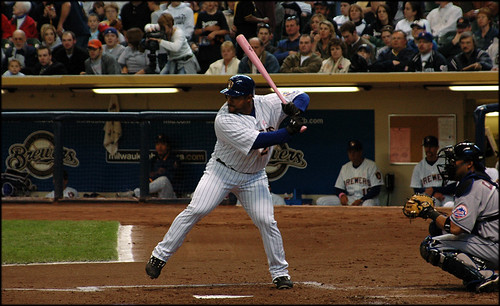
Now, I'm not against pink in general. It's a legitimate color, worthy of roses, pencil erasers, and raspberry sherbet. I'll even allow for it's migration into baseball, but only with good reason. But as an award, I must take issue. Awards should be shiny - gold or silver preferably - and tastefully named. Awards should not, to the best of my understanding, contain either flowers or teacups, unless said award is for an individual's talent or achievements in gardening and/or tea consumption. (Neither of which I am especially adept at.)

The links above reference actual trophies. Since it is difficult to email trophies, and impractical for blog award winners to display three dimensional objects on their websites, I'd like to display something else. Something that says, "Yes! That's what I'm talking about!" And yes, I'm allowing attitude to trump shininess in this situation. So if it's alright with Ms. Houghton's Class, who awarded me this distinction, I'd like to display the following picture to represent a more "me" feel.


So whaddya think? Will that work?

The last time I received an award I admittedly bent the rules of acceptance, choosing to look backward at worthy recipients rather than forward the award, so to speak. This time, well, "bending" the rules would be a generous description. I'm giving great thanks and a tip o' the hat (or a pump o' the fist, considering the above picture) to Shannon from Ms. Houghton's Class ... and that's it. I'm using books to read and posts to write as (hopefully) worthy excuses. So I tentatively accept the One Lovely Blog Award, recognizing that in order to do so one should follow the rules and probably not disrespect said award's pinky icon, and I pray that some sort of e-karma doesn't come back to get me.